June 14, 2026
How to Start a Quiz Night at Your Pub
The most expensive hours in any pub are the ones when nobody is in. The rent runs, the lights run, the bar staff stand around, and the till stays quiet. A regular quiz night is one of the cheapest tools you have to turn a dead weeknight into a full room - no refit, no new menu, no advertising budget. This guide looks at the quiz not from the host's side but from the owner's: as a line on your profit and loss.
Why a quiz fills a dead night
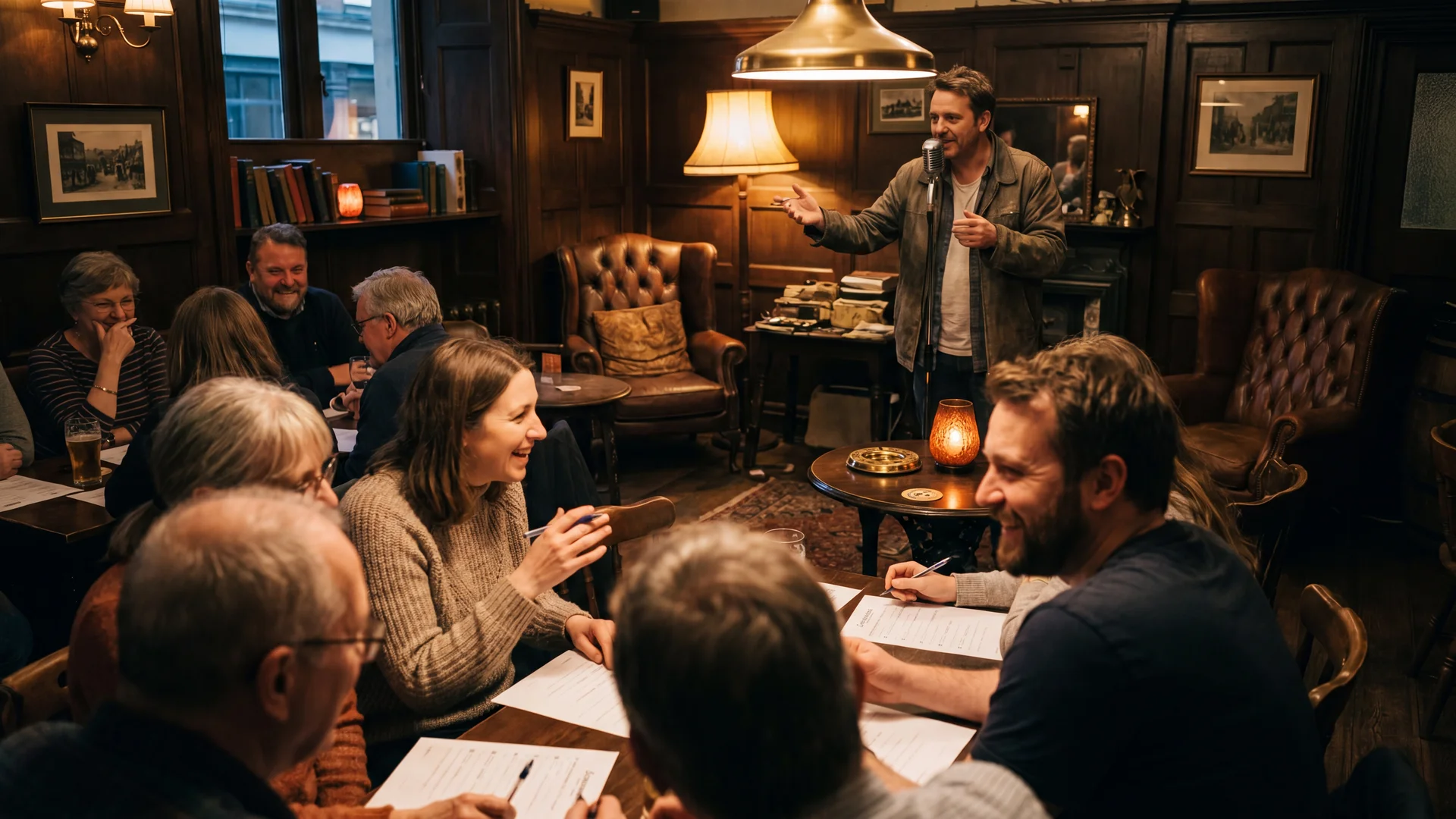
A quiz works because it gives people a reason to come in on a specific night, at a specific time, and then stay longer than they meant to. A team usually plays for two to two and a half hours. Across that time they order rounds, snacks, sometimes a full meal. This is not one pint and out; it is a whole evening seated, with a built-in reason to keep topping up.
The second strength is repetition. A one-off event pulls people in once. A regular quiz builds a habit: "Tuesdays we go to ours for the quiz." After a few weeks you have regular teams who book a table on their own. That is an asset that works every week, and the cost of keeping it running is fixed and low.
There is a third benefit you only notice over time: a quiz fills the room with a quiet, full-price crowd. You do not need happy hours or discounts to draw them. They come for the entertainment and they drink and eat off the menu.
Which night, and what time
The rule is simple: put the quiz on your weakest night, not your best one. The aim is to lift the floor, not to cannibalise an already busy Friday. In most venues the weak nights are Tuesday, Wednesday and Thursday. Tuesday and Wednesday are the most common picks - early enough in the week that you are not competing with the weekend, but far enough from Monday that people will bother coming out.
Do not shuffle the quiz around. A fixed date is the foundation of the habit. If you start on Tuesdays, stay on Tuesdays, even if the first two are thin. Turnout grows through repetition, not through hunting for the perfect day.
Start time depends on your crowd. In a venue with an after-work crowd, a start between 7:00 and 7:30 pm works well - people get to eat and settle first. Allow half an hour of slack for sign-ups and first orders before round one. Aim to fit the whole quiz inside a two to two-and-a-half hour window so people leave happy rather than worn out. How to lay out the rounds and questions themselves is covered in how to host your first pub quiz.
Building turnout from zero
Your first quiz is almost never full, and that is normal. Turnout is a six to eight week project, not a single evening. The worst thing you can do is give up after two thin nights.
Start with your own customers. Put table tents out, hang a poster by the bar, get staff to mention the quiz when people pay. Your regulars are the cheapest channel you have. Give them a clear message: which night, what time, the entry cost, and the prize.
Then move beyond the venue - local Facebook groups, your own page, maybe a short weekly post with the results and a teaser for the next date. A fuller set of channels and tactics is in how to promote a quiz night. The key lever is a prize that pulls people back: a tab to spend in the venue, a free round for the winning team, credit toward the next quiz. A prize spent at your bar is cheaper than cash and lifts your takings a second time.
A small but effective trick: cap team size (say at six). It forces more tables, and more tables means more bills.
Host it yourself or hire a quizmaster
This is your first real cost decision. You have three routes.
Hosting it yourself, or having a member of staff do it, costs nothing in host fees, but someone needs charisma on the mic and time to prepare questions. It works well in smaller venues and at the start, when you want to test the idea without spend. The downside is that the quiz night takes that person off the bar.
Hiring an outside host gives you convenience and quality - a good quizmaster lifts the room - but it costs per night and a good one can be hard to lock into a fixed slot. It makes sense once the quiz has momentum and the revenue covers it.
The third route, and the most common in practice: someone of yours hosts, but you take the ready-made question pack and answer sheets from outside so you are not losing hours on prep. That combines zero host cost with good questions and no work on your part. What you physically need to run the night is covered in pub quiz equipment checklist.
What it actually costs
A quiz is cheap because almost all of the cost is variable and under your control.
Fixed cost per night is, in practice: host time (zero if a staff member runs it), sound (you usually have a mic and speaker already), printing answer sheets (pennies), and the prize. The prize can be set entirely as a venue tab, so the real cost is your margin, not the full amount.
One-off costs are a possible basic sound setup and some launch promo material. These are sums a single better night pays back.
On the revenue side, count what would not otherwise exist: the bar and kitchen spend from people who would not have come in that night. Ten teams of four or five, each ordering across two hours, is takings a quiet Tuesday simply does not produce. An entry fee (per person or per team) can be a nice extra, but the real money is in the bar and kitchen, not the door. The full profitability case with numbers is laid out in are pub quizzes profitable.
Bar and food revenue - where the money really is
Treat the quiz as a machine for generating long visits, not as ticket sales. A team seated for two hours orders in cycles: a pint to start, refills between rounds, snacks at the break, sometimes something from the kitchen. Your job is to make each of those orders easy.
A few things that genuinely lift the bill: staff circulating between rounds rather than only behind the bar, a simple sharing-snacks offer for the table, and a mid-quiz break set deliberately so people queue at the bar. Food is the quiet hero here - a team that orders something hot stays longer and spends more than a team on pints alone.
Measure it. Compare the takings on quiz night with a like-for-like day before you launched. After four to six weeks you will see whether the quiz delivers, and whether a second night in the week is worth adding.
A note on licensing
Licensing varies a great deal by country and even by local authority, so treat this as a prompt to check, not legal advice. In general, if you already serve alcohol and put on entertainment, running a quiz usually sits within your existing licence - but two things are worth confirming locally. First, charging an entry fee and giving a prize can, in some jurisdictions, touch gaming or lottery rules, especially if the prize is cash; framing the prize as a venue tab and keeping entry modest usually keeps you clear, but confirm it. Second, if you plan to play recorded music for a music round, you may need a music licence for public performance. A quick call to your local licensing authority before launch saves any awkward surprises later.
FAQ
What is the best night of the week for a pub quiz?
Your weakest night, most often a Tuesday or Wednesday. A quiz should lift the slow part of your week, not compete with a busy weekend. Pick one night and stick to it, because turnout grows through repetition.
Do I have to charge an entry fee?
No, and often it is better not to. The real revenue is in the bar and kitchen, not at the door. An entry fee can be a small extra, or it can go entirely into the prize pot to raise the stakes for teams. The priority is getting people in and keeping them longer.
Do I need expensive equipment to start?
No. To begin you need a microphone, a speaker (you often already have one), printed answer sheets, and a ready-made question pack. See our pub quiz equipment checklist for the full list. You only invest in better sound once the quiz has momentum.
Should I worry about licensing for a quiz night?
Usually a quiz sits within an existing pub licence, but two areas are worth a quick local check: prize and entry rules (especially cash prizes, which can touch gaming law) and a music licence if you play recorded tracks for a music round. Rules vary by location, so confirm with your local authority before launch.
Don't want to write questions by hand? Build the whole pack in RoundKit - free, in 5 minutes. You get the questions, printable answer sheets and a host script, ready for this week's night, without the hours over a notepad.